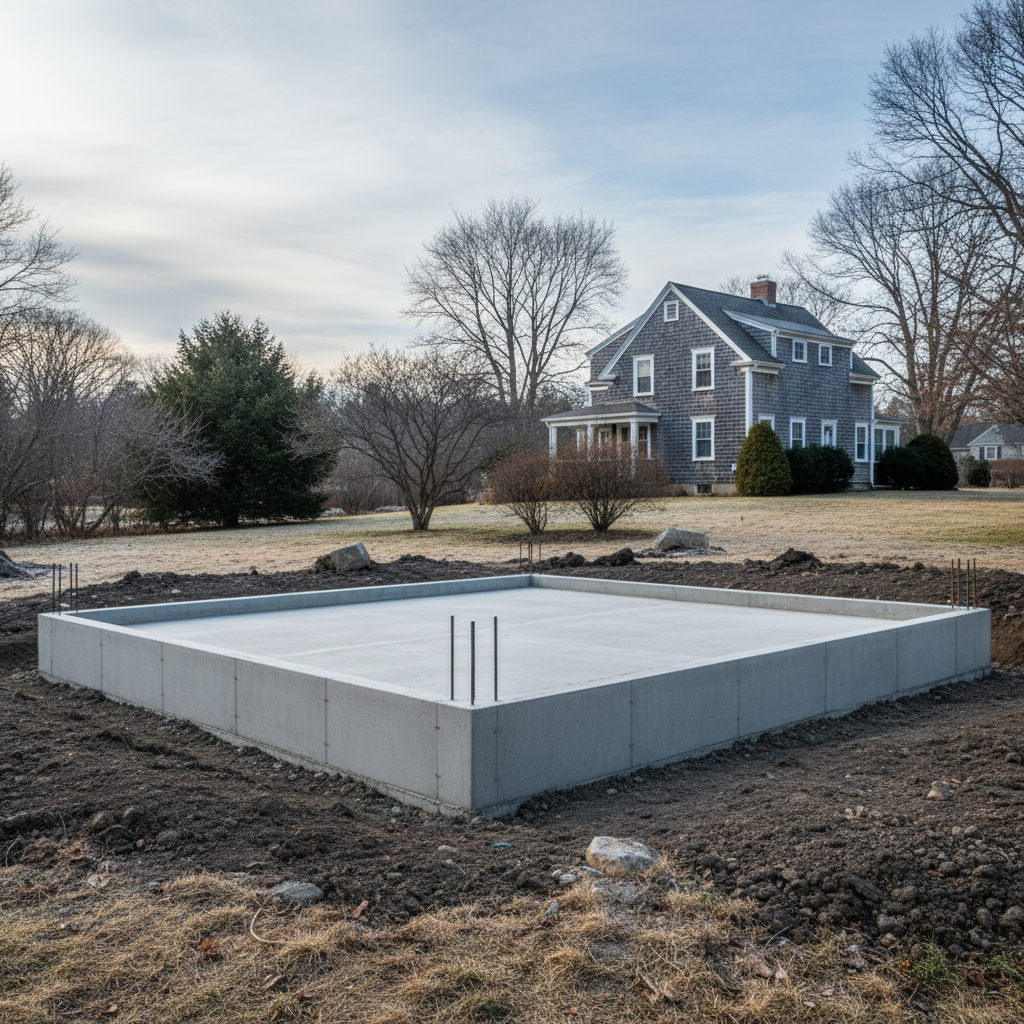
Ever notice how some home foundations in Barrington just seem to hold up better than others over the decades? Heritage Concrete & Masonry has seen working around town that it usually comes down to how well the pour respects our local weather patterns. Living right near Narragansett Bay gives us plenty of charm, but it also brings unique challenges for concrete foundations. Between the damp coastal air, shifting soil compositions, and heavy winter freeze-thaw cycles, you do not just treat concrete work here like you would inland.
If you are planning a new build or an addition, timing is everything. We generally look at late spring through early fall as the prime window for major foundation pours. During these months, the ground has fully thawed from winter, and temperatures allow the concrete to cure steadily without rushing or freezing. Pouring when it is freezing outside causes the water inside the mix to expand, ruining the structural integrity before it even hardens. On the flip side, scorching July heatwaves bring their own headaches, causing surface moisture to evaporate too quickly and leading to shrinkage cracks if we are not careful with admixtures and wet curing.
Down near areas like Rumstick Point or closer to the water table, soil conditions demand extra attention. You are often dealing with varying mixes of sandy loam and heavy marine clays that retain moisture differently. That means proper site excavation, heavy-duty sub-base compaction, and smart drainage planning are not optional steps—they are what keep your foundation from settling unevenly. Heritage Concrete & Masonry always accounts for local frost depth requirements to ensure footings sit deep enough to dodge winter heaving.
Protecting Your Foundation Through Every Season
Once your foundation is in place, protecting your investment becomes a year-round job. Spring brings heavy rains that test your perimeter drainage, so keeping gutters clean and grading soil away from your foundation walls is a must. Summer dry spells can cause clay soils to shrink and pull away, sometimes stressing the concrete. Come autumn, clear out wet leaves that trap moisture against the base of your home.
Winter is the real test in Rhode Island. Keep an eye on how water drains near your foundation during freeze-thaw events. If you spot hairline cracks or damp patches in the basement, address them early before seasonal moisture gets inside and expands. Staying proactive with simple maintenance saves you from massive structural headaches down the road.