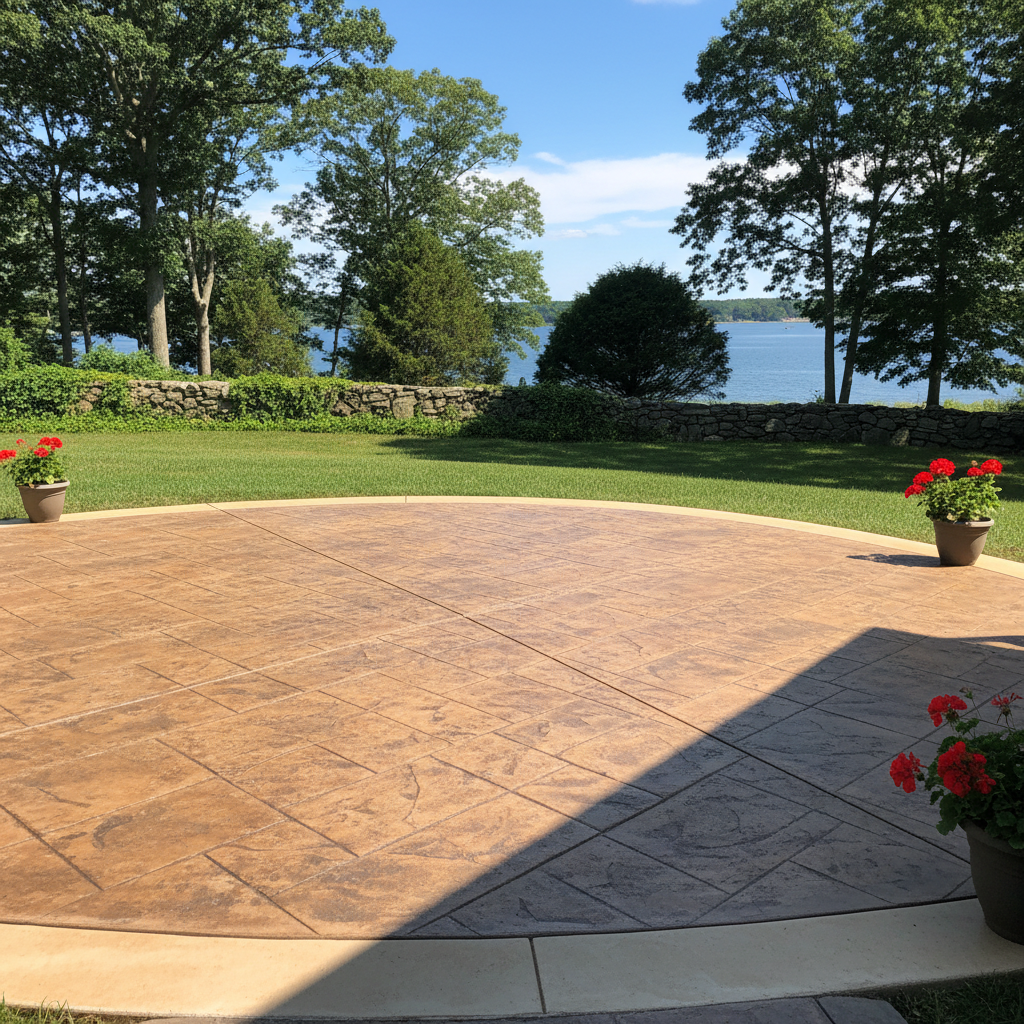
Alright, let's talk money. You're probably looking at decorative concrete for a patio, walkway, or maybe even an indoor floor, and you're wondering what it's actually going to cost you. It's not a one-size-fits-all answer, but I can give you a pretty good idea of what to expect here in Barrington.
What Drives the Price Tag?
A few big things really push the price up or down. It's not just about the square footage, though that's a big part of it.
- The Type of Decorative Concrete: This is probably the biggest factor.
- Stamped Concrete: This is usually your most cost-effective option for decorative work. You're looking at patterns and textures that mimic stone, brick, or wood.
- Stained Concrete: This involves applying a chemical stain that reacts with the concrete to create translucent, variegated colors. It's often applied to existing concrete, which can sometimes save on prep if the slab is in good shape.
- Polished Concrete: This is a premium finish. We grind the concrete surface down, sometimes exposing aggregate, and then polish it to a high sheen. It's durable and looks fantastic, but it's labor-intensive.
- Epoxy Coatings/Resurfacing: These are often used for garage floors or commercial spaces. They offer a huge range of colors and finishes, including metallic and flake systems.
- Project Complexity and Size: A simple, rectangular patio is always going to be cheaper per square foot than a winding pathway with intricate curves and multiple elevation changes. Smaller jobs also tend to have a higher per-square-foot cost because the fixed costs (like mobilization, setup, and cleanup) are spread over fewer square feet.
- Existing Conditions: Are we tearing out old concrete? Dealing with poor drainage? Is the ground super soft, like some of the marshy areas near Hundred Acre Cove? All these things add time and materials, which means more cost. If we have to bring in a lot of gravel for a proper sub-base, that's an extra expense.
- Color and Finish Choices: A single color stamp is less expensive than a multi-color antiquing process with hand-scored details. The more custom colors, patterns, and intricate details you want, the more labor and specialized materials are involved.
Typical Price Ranges (Per Square Foot)
Okay, let's get down to some numbers. These are general ranges for installed decorative concrete, including materials and labor, here in the Barrington area. Remember, these are estimates, and your specific project will get a custom quote.
- Stamped Concrete: You're generally looking at $12 to $20 per square foot. A basic, single-color stamp might be on the lower end, while a more complex pattern with multiple colors and release agents could push it higher.
- Stained Concrete: For existing concrete in good shape, staining might run $6 to $12 per square foot. If we're pouring new concrete and then staining it, it'll be closer to the stamped concrete range, perhaps $10 to $18 per square foot, depending on the prep and finish.
- Polished Concrete: This is where it gets pricier. For a good, durable polish, expect to pay anywhere from $15 to $30 per square foot, and sometimes even more for very high-gloss, intricate aggregate exposure.
- Epoxy/Resurfacing: Basic solid color epoxy for a garage might be $7 to $12 per square foot. Flake or metallic systems, which are more labor-intensive and use more specialized materials, can go from $12 to $25+ per square foot.
So, a 400 square foot stamped patio could cost you anywhere from $4,800 to $8,000. A 2-car garage (around 400 sq ft) with a nice flake epoxy system might be $4,800 to $10,000.
What's Included in a Quote from Heritage Concrete & Masonry?
When you get a quote from us, it's comprehensive. You won't find hidden fees popping up later. Here's what we typically include:
- Site Preparation: This covers excavation, grading, and compacting the sub-base. If we're removing old concrete, that's usually itemized separately.
- Materials: All concrete, rebar or wire mesh reinforcement, expansion joints, control joints, color hardeners, release agents, stains, sealers, and any other necessary chemicals or aggregates.
- Labor: The cost of our skilled crew for pouring, stamping, finishing, and sealing.
- Formwork: Setting up and removing the forms that shape your concrete.
- Cleanup: We don't leave a mess. We'll clean up the site, haul away debris, and leave your property looking good.
- Permits: If your project requires one, we'll help you navigate that process, though the permit fee itself is usually paid directly by the homeowner to the town.
How to Avoid Overpaying (or Getting Scammed)
You want a good job at a fair price, right? Here's my advice:
- Get Multiple Quotes: Don't just go with the first guy. Get at least three detailed quotes. Make sure they're comparing apples to apples – the same scope of work, materials, and finishes.
- Ask for References and See Work: Any reputable contractor will be happy to show you examples of their past work and give you contact info for previous clients. See if their work holds up.
- Beware of Super Low Bids: If one quote is drastically lower than the others, there's usually a reason. They might be cutting corners on materials, not carrying proper insurance, or planning to add on costs later. It's a red flag.
- Understand the Contract: Read everything. Make sure the scope of work, materials, timeline, and payment schedule are clearly spelled out.
- Don't Pay in Full Upfront: A reasonable down payment (often 30-50%) is normal for materials, but never pay 100% before the work even starts. Final payment should be upon satisfactory completion.
- Ask About Warranties: What kind of guarantee do they offer on their work? A good contractor stands behind their product.
Decorative concrete is an investment, and when it's done right, it really adds value and beauty to your home. Just do your homework, and you'll be happy with the results.