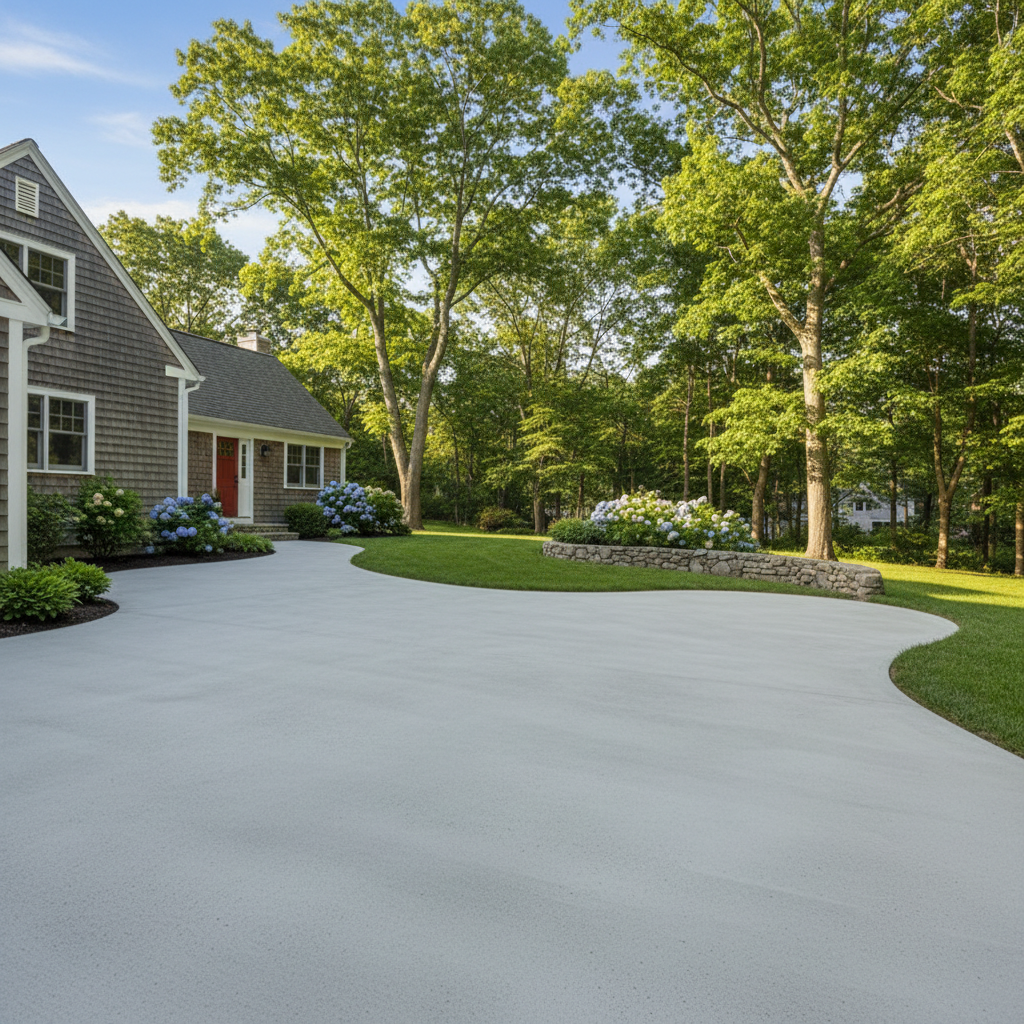
You want your concrete patio to last, right? Of course you do. When I pour a patio for someone in Barrington, whether it's a new build down by the water or an older home up near the high school, I know they're counting on it to stand up to our crazy New England weather. It's not just about looking good the day we finish, you know? It's about staying strong for years. So, let's talk about how you can make sure that happens.
Extending the Life of Your Concrete Patio
The biggest thing you can do to make your patio last longer starts with how it's built. Good drainage, getting the sub-base ready the right way, and using the correct concrete mix are all super important. But once it's in, sealing is your absolute best friend. I really can't stress this enough. A good quality penetrating sealer, put on correctly, acts like a shield for your concrete.
Here's why it matters so much, especially around here: our freeze-thaw cycles are brutal. Water gets into tiny pores in the concrete, freezes, expands, and then thaws. Over time, this constant expansion and contraction can cause spalling and cracking. A sealer pushes that water away, stopping it from getting in in the first place. You should plan on resealing your patio every 2-3 years. Maybe even annually if it sees a lot of foot traffic or is exposed to harsh elements, like constant salt spray from Narragansett Bay.
Another thing is to stay away from harsh chemicals. Things like de-icers with ammonium nitrates or sulfates can really eat away at concrete. Use sand for traction in winter, or a calcium chloride-based de-icer if you absolutely need one, but use it sparingly. And for cleaning? Stick to mild detergents.
Regular Maintenance: What You Need to Do
Keeping your patio in good shape isn't rocket science, but it does need a little attention. Think of it like changing the oil in your car – small efforts prevent big problems.
- Clean it regularly: Sweep off dirt, leaves, and other junk. This stops organic stuff from breaking down and staining the surface. For a deeper clean, a pressure washer on a low setting (no more than 1500 PSI) with a fan tip works wonders. Just be careful not to hold it too close or use too high a pressure, or you could damage the surface, especially if it's stamped or decorative.
- Address spills immediately: Oil, grease, wine, pet stains – the quicker you get to them, the less likely they are to set in. Use the right cleaners for the stain type, but always test in a hidden spot first.
- Trim back foliage: Tree roots can cause serious damage over time, lifting and cracking slabs. Keep plants and shrubs trimmed back so they're not growing directly onto or under your patio.
- Check your drainage: Make sure water is flowing away from your patio, not pooling on it. If you see standing water after a rain, that's a problem you need to address. It could mean clogged drains, or maybe the patio itself isn't sloped correctly.
These small steps make a huge difference in the long run. They're not just about how it looks; they're about preventing structural issues.
Warning Signs You Shouldn't Ignore
Your patio will talk to you if something's wrong. You just need to know what to listen for. Catching these issues early can save you a lot of headache and money down the road, believe me.
- Cracks: Hairline cracks, especially along control joints, are often normal and nothing to worry about. But if you see cracks that are widening, longer than a few feet, or if one side of the crack is noticeably higher than the other, that's a red flag. These could mean sub-base issues or significant settlement.
- Spalling or flaking: This is when the surface of the concrete starts to peel or chip away. It's usually a sign of water damage from freeze-thaw cycles, often because of inadequate sealing or a poor quality concrete mix.
- Pitting: Small holes or depressions in the surface. This can happen when aggregate pops out, often due to impurities in the mix or again, freeze-thaw damage.
- Uneven surfaces or sinking: If parts of your patio are noticeably lower than others, or if a slab seems to be sinking, it points to problems with the soil or sub-base underneath. This is particularly common in areas with poorly compacted fill or where water is eroding the soil beneath the slab.
- Stains that won't come out: While some stains are just tough, persistent discoloration could indicate a deeper issue, especially if it comes with other signs of deterioration.
Don't ignore these. A small crack can become a big one, and spalling can spread if you just leave it alone.
When to Call a Professional
Look, I'm all for DIY, but there are some things you just shouldn't mess with if you're not sure. When you see those warning signs, especially the more serious ones, it's time to get a pro involved. Here's when you should definitely pick up the phone:
- Significant cracking or movement: If you've got cracks that are more than a quarter-inch wide, or if slabs are shifting and creating trip hazards, you need an expert to figure out the underlying cause. It might be a simple repair, or it could mean a more serious structural issue that needs specialized equipment or knowledge.
- Extensive spalling or surface deterioration: If a large portion of your patio surface is flaking or pitting, a simple patch won't cut it. We might need to look at resurfacing options or even replacement if the damage is too severe.
- Drainage issues causing pooling water: If water is consistently pooling on your patio, we can check the grading, install trench drains, or put in other solutions to protect your investment and your home's foundation. Here in Barrington, with our high water table in some areas, good drainage is absolutely critical.
- You're unsure about the cause: If you see something weird and you're not sure what it is or how to fix it, just give Heritage Concrete & Masonry a call. It's better to get a professional opinion early than to let a small problem become a major repair.
Your concrete patio is a big part of your outdoor living space. With a little care and knowing when to call in the cavalry, you can keep it looking great and serving you well for decades to come.