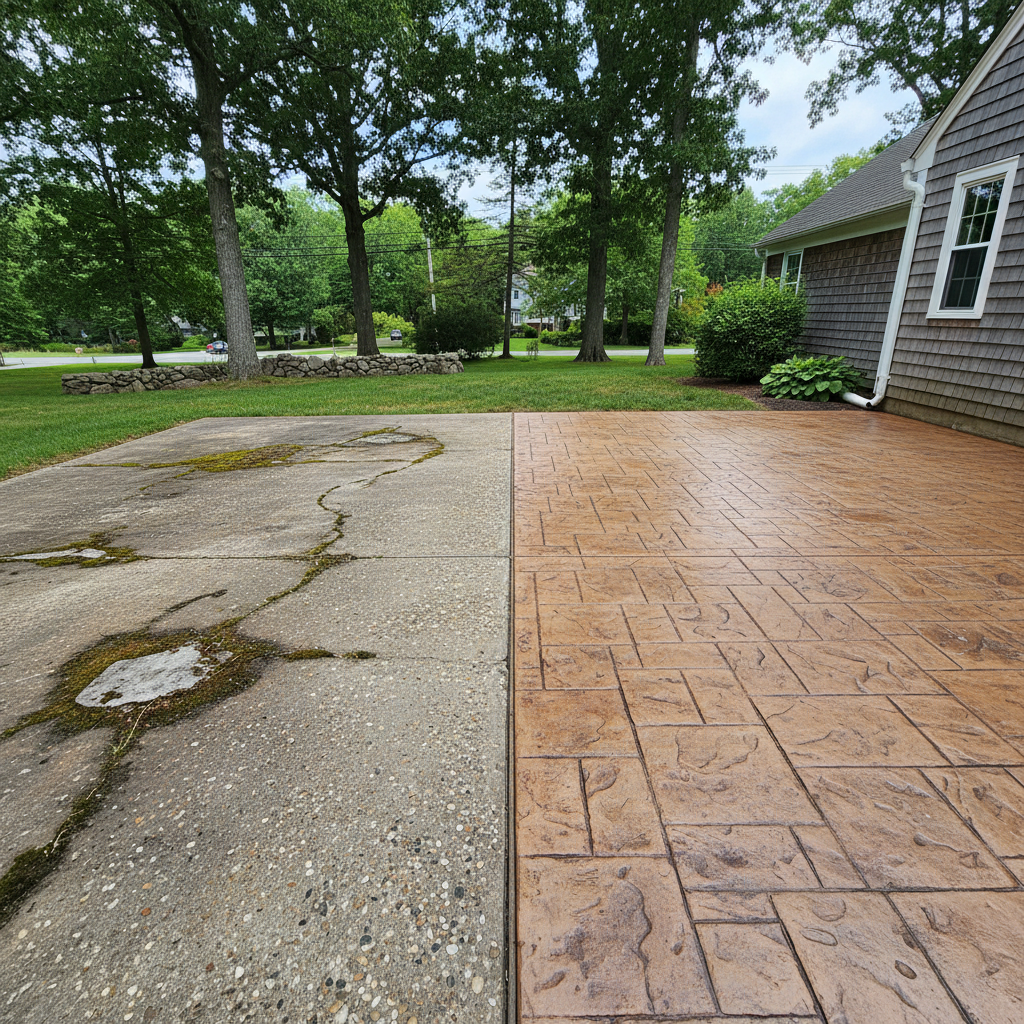
So, you're thinking about sprucing up your outdoor space, right? Maybe a new patio, a winding walkway, or even a pool deck that really pops. You've probably heard about decorative concrete, and honestly, that's a smart move. It's tough, looks fantastic, and can seriously boost your home's curb appeal. But when you start digging into it, you'll find there are a few different ways to get there. Today, I want to chat about two of the most popular choices: stamped concrete and stained concrete. They both look amazing, but they're pretty different in how we do them, what they cost, and what you can expect down the road.
Stamped Concrete: Luxury Looks, Not Luxury Prices
Stamped concrete is probably what most people picture when they hear "decorative concrete." We pour fresh concrete, then, before it completely hardens, we press large, flexible mats right into the surface. These mats have patterns molded into them – think natural stone, brick, wood planks, or even slate. We can also mix color into the concrete itself, or put down a color release agent before stamping to give it a multi-tonal, aged kind of look.
The Good Stuff:
- Looks Incredibly Real: It's truly amazing how much stamped concrete can look like natural materials. You can get that high-end flagstone or cobblestone vibe without individual pavers shifting around or weeds popping up between them.
- Tough as Nails: It's concrete, so it's naturally strong. When we install it correctly, it'll stand up to our New England winters, road salt, and heavy foot traffic for decades. You won't have to worry about loose stones, which is a real plus.
- Great Value: Building a patio that looks like natural stone or brick would cost you a fortune in materials and labor. Stamped concrete gives you that premium look for a fraction of the price.
Things to Keep in Mind:
- Upfront Cost: Generally, it costs more initially than stained concrete. That's because of the specialized tools, the materials, and the skilled crew needed for the stamping process.
- Maintenance: While it's durable, stamped concrete does need sealing every few years. This protects the color and pattern and helps stop surface wear. If you skip sealing, well, it'll fade and show wear faster, won't it?
- Repairs: If a section cracks or gets damaged, matching the exact pattern and color can be a bit tricky. It's not impossible, but it takes a really skilled hand to make it blend in perfectly.
Stained Concrete: Color and Character
Stained concrete is a totally different beast. Instead of adding texture, we're adding color that soaks right into the concrete's surface. We mainly use two types of stains: acid-based and water-based. Acid stains react chemically with the concrete's minerals, creating mottled, see-through effects that feel unique and earthy. Water-based stains, on the other hand, offer a wider range of colors and more consistent coverage, often looking more opaque.
The Good Stuff:
- Budget-Friendly: Generally, staining costs less than stamping. If you've already got a concrete slab that's in decent shape, staining it can be a super affordable way to totally change its look.
- One-of-a-Kind Appearance: Especially with acid stains, you get a beautiful, varied, and often unpredictable finish. It's not a solid, painted look; it's more like natural stone with different shades and tones. Truly unique.
- Smooth Surface: Since it's just color, there's no added texture to chip or wear down. It's very smooth underfoot, which can be great for areas where you want easy cleaning or to roll things around.
Things to Keep in Mind:
- Surface Condition is Crucial: Stains really highlight imperfections. If your existing concrete has cracks, patches, or heavy discoloration, the stain will probably make those features stand out even more. It doesn't hide a thing.
- Limited Color Choices (Acid Stains): Acid stains usually come in earth tones – think browns, tans, greens, blues. If you're dreaming of vibrant reds or bright yellows, water-based stains are your only option, and even then, they might not be as punchy as a painted surface.
- Maintenance: Just like stamped concrete, stained concrete needs regular sealing to protect the color and prevent wear. Without a good sealer, the color can fade, especially in direct sunlight.
Which One Should You Pick for Your Barrington Home?
Alright, let's get down to brass tacks. You've got options, but which one makes the most sense for your place here in Barrington?
If you're after that high-end, natural stone or brick look – picture a classic patio for your colonial home in Rumstick Point, or a sophisticated walkway leading up to your front door – and you've got the budget for it, stamped concrete is probably your best bet. It offers unmatched aesthetic appeal and durability against our coastal weather. When Heritage Concrete & Masonry does a stamped concrete job, we make sure the base is solid and the sealing is top-notch, because we know what those freeze-thaw cycles can do.
However, if you're working with an existing concrete slab that's in good shape, or if you prefer a more subtle, earthy, and truly unique color treatment without added texture, stained concrete is a fantastic, cost-effective option. It's great for pool decks where you want a smooth surface, or for giving an old, drab garage floor a new lease on life. Just remember, it won't hide existing flaws, so the concrete needs to be relatively clean and crack-free to start.
Ultimately, it comes down to your vision, your budget, and what your concrete looks like right now. Both options are a huge upgrade from plain gray concrete, and either one will add significant value and beauty to your home. Give us a call, and we can walk you through samples and talk about what would look best for your specific project.